

Course
Overview

This course is for filmmakers and creatives who want to experiment, innovate and shape the future of storytelling.
You’ll work in a hands-on filmmaking environment while using advanced production tools, including virtual production, immersive media and generative storytelling tools.
You’ll develop your own creative voice through collaboration with filmmakers, performers and technologists, exploring the stories you want to tell. From concept to final output, you’ll bring ideas to life through bold short films and interactive digital experiences.
Combining practical production, critical thinking and research, the course encourages you to push boundaries, experiment with form, and tell meaningful stories in innovative ways.

Course Highlights
Practice-led learning – develop your craft through hands-on projects. All but one module includes a substantial practical project.
Explore emerging technologies – go beyond traditional filmmaking by experimenting with new technologies and innovative approaches to storytelling.
Industry-standard facilities – create your work using professional-quality film, television and digital production and post-production facilities.
Collaborative environment – work with performers, technicians, designers and creative managers, reflecting the collaborative nature of professional film and television production.
Research through practice – build advanced research skills and learn how to integrate critical enquiry into your creative process, strengthening both the artistic and intellectual foundations of your work.


What You Will
Study
Contemporary creative practice
In this module, you develop your creative, technical and conceptual filmmaking skills through the exploration of contemporary screen practice. You will extend your creative authorship, experiment with innovative production approaches, and critically examine the aesthetic, ethical and technological contexts that shape contemporary filmmaking and screen-based practice.
Through an extended creative project or a series of connected practical explorations, supported by technical workshops, practical sessions and academic supervision, you will refine your professional craft, strengthen your critical thinking and position your work within contemporary global film and media culture.
Research methods for creative practice
In this module, you will be introduced to a range of research methods and methodologies relevant to creative, performance and management disciplines. You will develop the research skills, critical thinking and ethical awareness needed for postgraduate study, professional practice and independent enquiry.
Exploring approaches including primary and secondary research, practice-led research, and practice as research, you will learn how to select and apply methods that best support your creative, professional or academic aims. By the end of the module, you will be able to design and articulate a coherent research approach that underpins your final project and future practice.
Post-digital storytelling
In this module, you explore narrative, creative authorship and emerging forms of storytelling in a rapidly evolving digital landscape. You will investigate immersive and interactive approaches across extended reality, virtual reality, augmented reality and mixed reality, alongside generative and other emerging media technologies. You’ll examine how these technologies reshape the relationship between creator, medium and audience.
Building on the research skills developed earlier in the programme, you will combine critical enquiry with creative experimentation, positioning your work within contemporary debates around media futures, posthumanism, platform studies and the ethical implications of emerging technologies.
Collaborative studio - innovation lab
In this module, you explore interdisciplinary collaboration and innovation in filmmaking and creative technologies. Working in multidisciplinary teams, you will develop and deliver an original project in response to a speculative challenge inspired by emerging screen-sector practice, or a live industry brief.
Applying advanced creative, technical and organisational skills, you will produce a prototype, short film, interactive experience or other screen-based project. Reflecting professional production environments, the studio model encourages collaborative problem-solving, experimentation and iterative development, supported by critical reflection on both the creative process and your individual contribution.
Major project: film/technology showcase
The major project is the culmination of the MA, providing you with the opportunity to conceive, develop and realise a substantial self-directed creative project. Depending on your interests, this may take the form of a film, immersive or interactive experience, installation, or another technology-driven screen-based work.
Drawing together the creative, technical and research skills developed throughout the programme, you will demonstrate originality, professional competence and critical insight. Where appropriate, you will be encouraged to collaborate with industry partners and present your work through public exhibition, festival submission or other professional platforms.
How You Will
Study
-
Lectures

-
Seminars

-
Productions

-
Group Work

-
Masterclass

-
Independent study

-
Mentoring

-
Supervision

How You Will Be
Assessed
The course employs a number of relevant assessment strategies: These include essays, critical reflection reports, evaluative presentations, and a portfolio of creative artefacts, such as films, prototypes or installations.
Group work forms an important part of the programme. Assessment within these modules is designed to recognise both the outcomes achieved by the team and the contribution made by each individual student. This may include reflective journals, production logs and individual evaluations submitted alongside the group project, enabling you to demonstrate your specific role, contribution and learning within the collaborative process.
Practical/written work ratio
70% practical work / 30% reflective work
This is provided as a rough guide as it can vary depending on your choices related to scripted and non-scripted work. Alternative formats for written/ reflective work can include, evaluative presentations, portfolios, videos blogs.
Our
Facilities
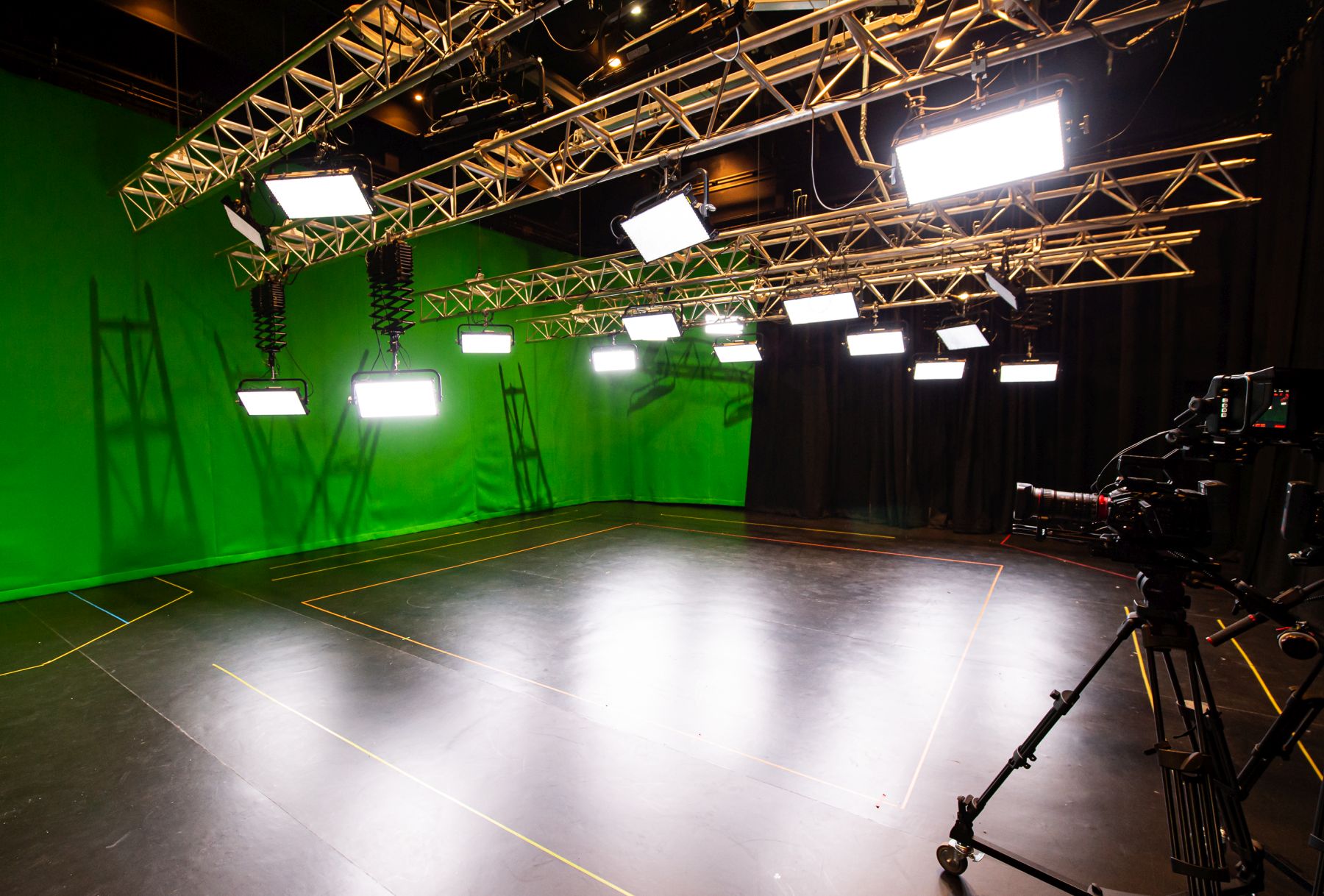
Sennheiser Studio
The Sennheiser Studio is equipped for UHD multi-camera productions with broadcast production cameras and cine zoom lenses, an array of KinoFlo variable LED lighting fixtures, motorised truss, a large 16m curved green screen for compositing and visual effects work and a dedicated fibre optic network.

Gallery and control room
Adjacent to the Sennheiser Studio, the gallery and control room is equipped with vision mixer, consoles for remotely controlling lighting, cameras, playback, recording, communications, streaming and teleprompting. Monitoring is achieved using three 50” UHD screens. Largely equipped by Blackmagic Design, it is fully integrated, highly versatile and has extensive digital network capabilities able to provide routing options throughout our facilities.
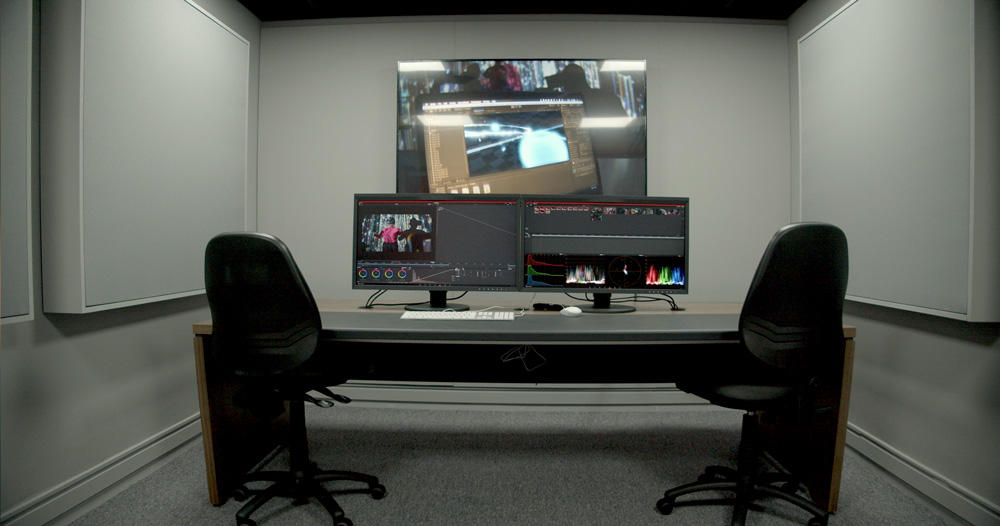
Grading suite
This acoustically treated digital lab is a finishing space that enables highly accurate grading, final correction and monitoring to take place before films and visual media are exported. It runs DaVinci Resolve Studio with supporting Blackmagic hardware panels, on EIZO monitors that are 98% colour accurate alongside a large 65” UHD display for viewing and screening work. The grading suite is a highly controlled environment with adjustable ambient lighting - with a colour temperature of neutral daylight.
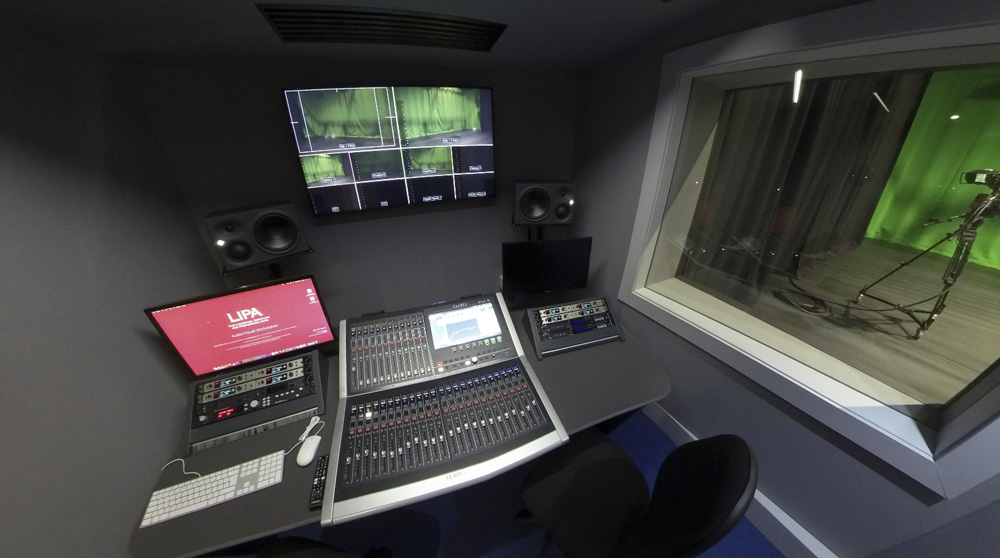
Live sound studio
Includes a Calrec Brio 36 channel desk that supports both live mixes from the studio or working with streamed or pre-recorded media from other parts of LIPA through dedicated fibre optic network, along with comms, radio MIC controls, audio playback facilities and Neumann monitoring speakers.
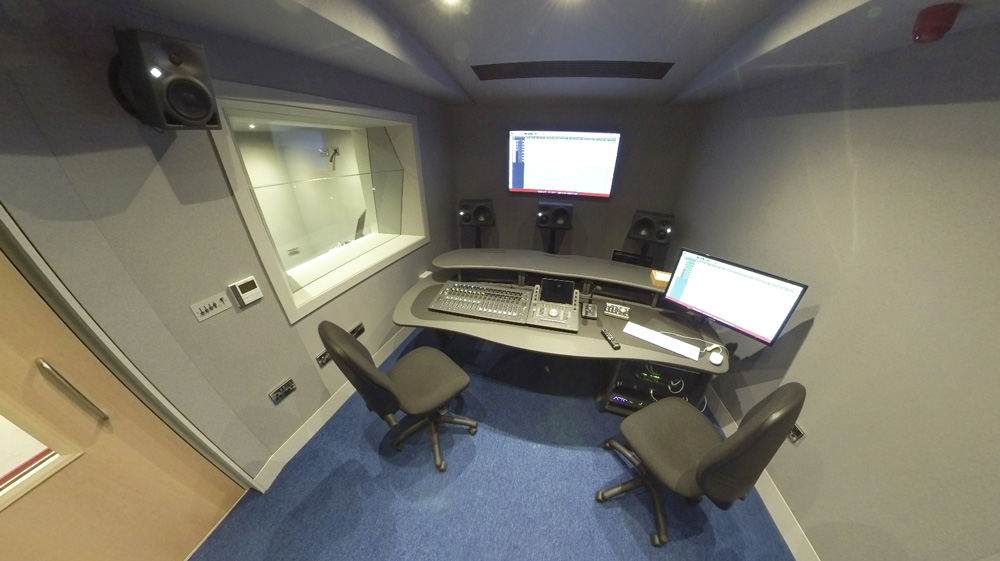
Surround sound studio and voiceover booth
Recording and mastering suite with 5:1 surround. The suite runs a variety of software including ProTools, Fairlight and Logic, with hardware consoles and Neumann monitoring speakers. Positioned alongside is a fully acoustically insulated voiceover booth for voice, ADR and Foley work.
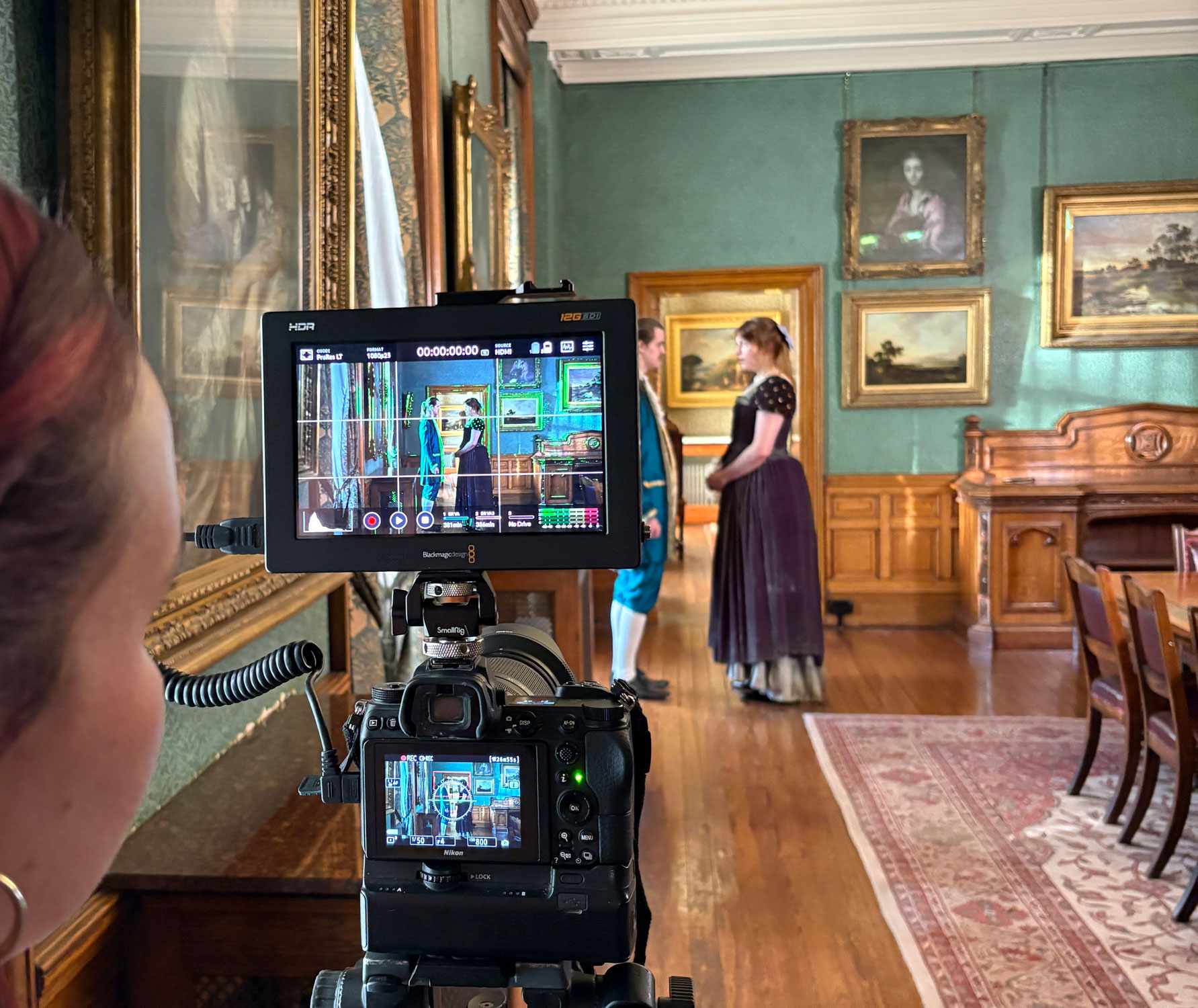
Cameras and location kit
Loanable equipment for location shots includes, Sony A7s and FX30, Canon EOS-R, Blackmagic 4K, 6K and 6K Pro Pocket Cinema, Red Komodo 6K and Arri Alexa cameras; Sennheiser wired and wireless microphones; Tascam, Zoom and Røde audio recording equipment; VIVE, Oculus and Meta VR headsets; a range of camera stabilisers, and Zhiyun and DJI gimbals.
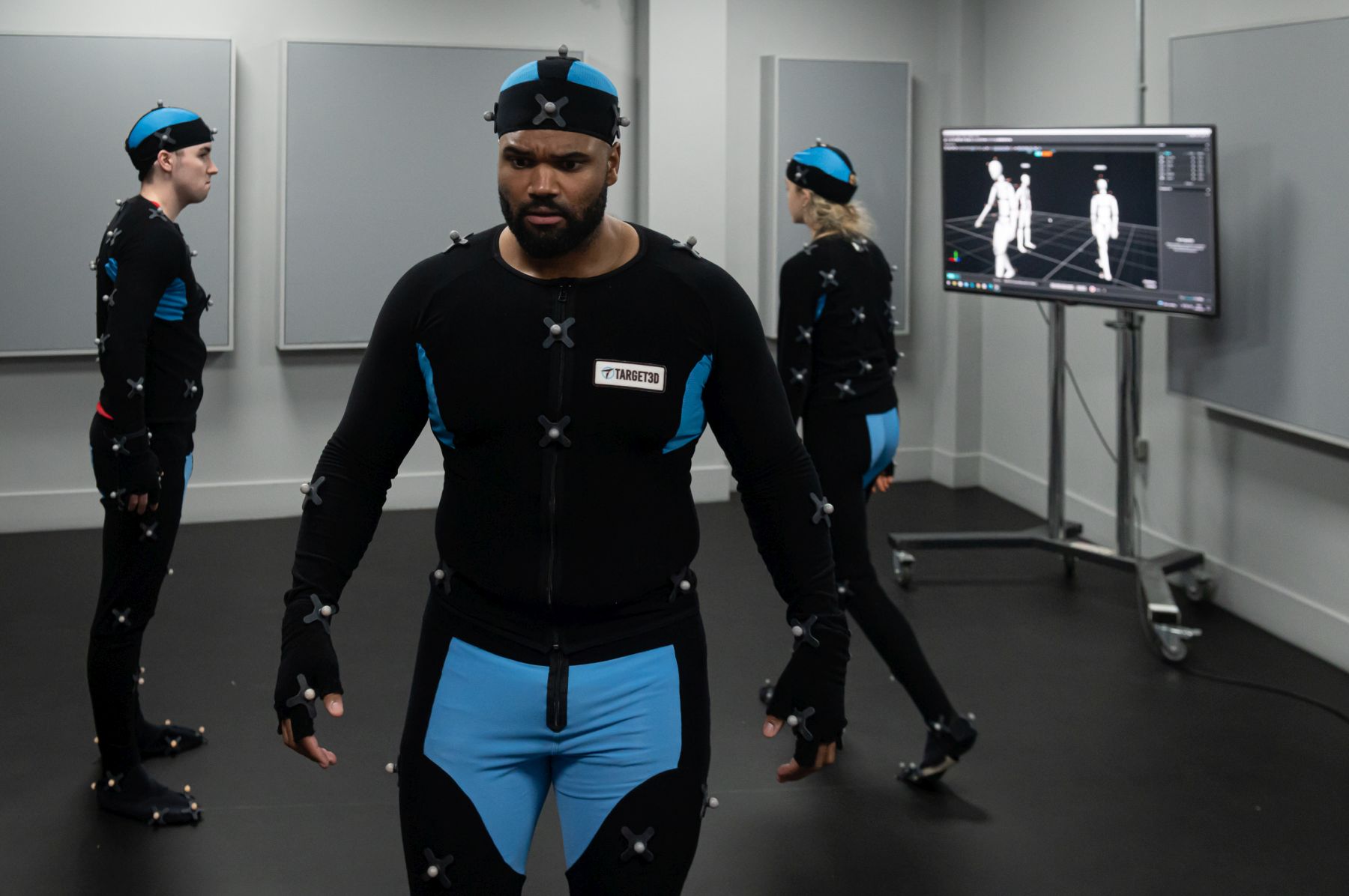
Motion Capture Suite
Our motion capture suite has an 18-camera array and support for virtual camera systems and VR headset preview. The Optitrak system is capable of full body capture of three performers at up to 120 fps.
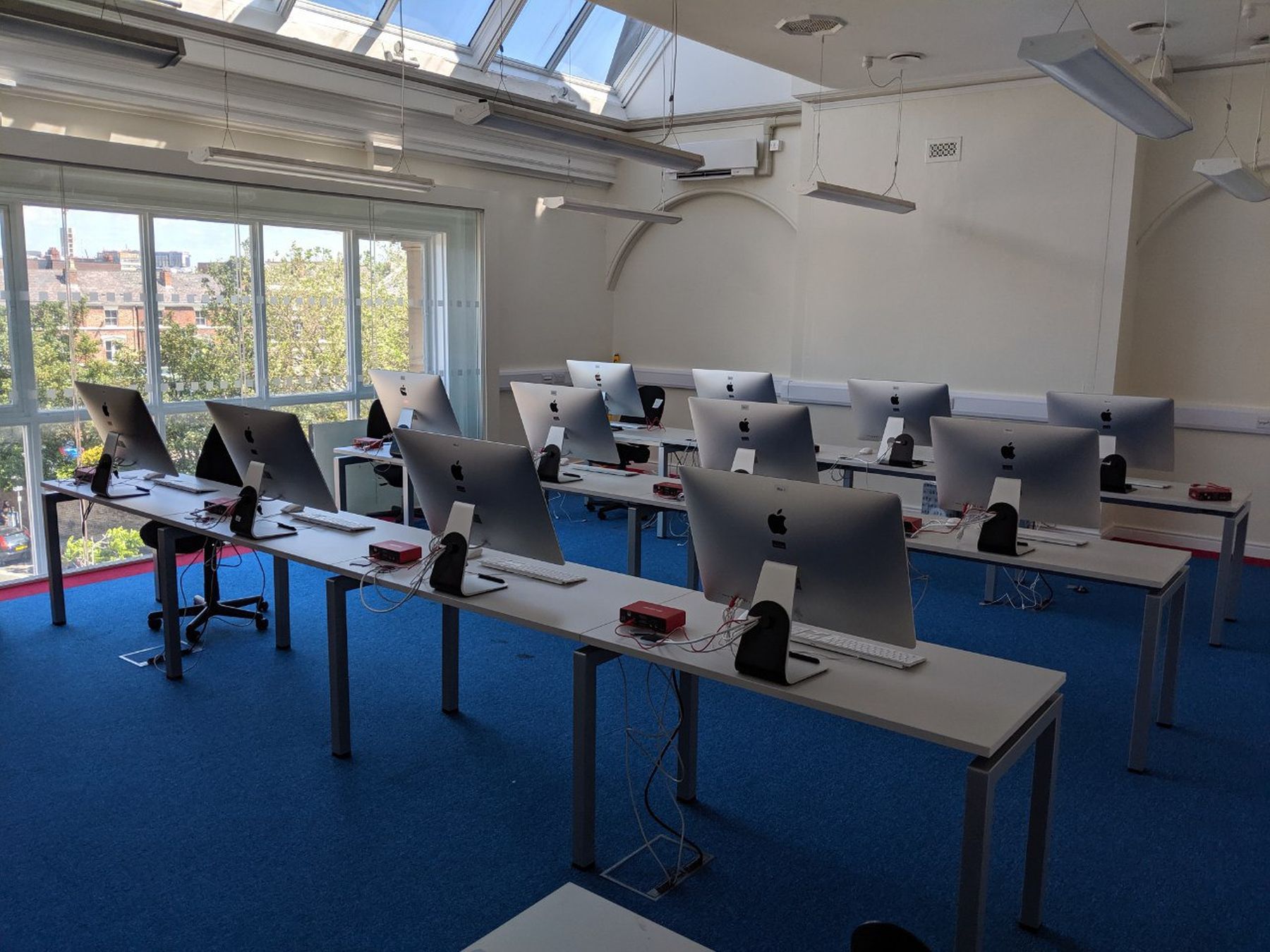
Media Edit Suite
Our post-production ICT suite is equipped with Apple iMacs. These computers all run Adobe Creative Cloud as well as a range of other post-production and design software including DaVinci Resolve Studio, Logic, Unity, Unreal Engine. Our post-production facilities also include a grading suite which has high accuracy UHD monitoring for editing and colour grading.
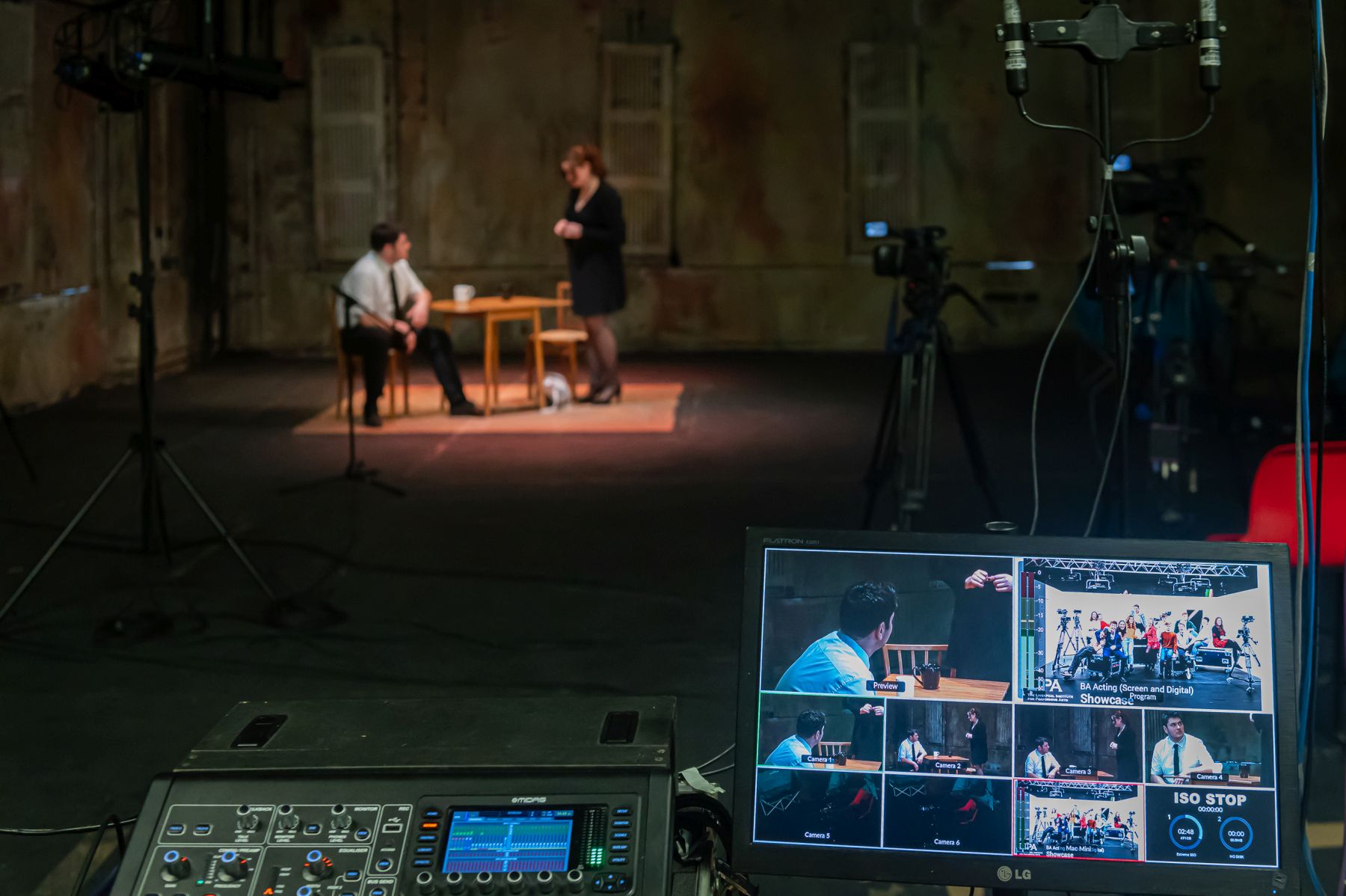
George Harrison Workshop Studio
Seating up to 120 people, The George Harrison Workshop Studio is a fully equipped experimental performance space that offers creatives and performers a ‘blank canvas’ for productions. As well as immersive and promenade performances, it can also host more traditional theatrical productions with a variety of stage and audience configurations. The George Harrison Workshop Studio is also used as an exhibition, rehearsal, and teaching space.

The Paul McCartney Auditorium
The PMA is the largest of LIPA’s performance spaces and is a traditional proscenium arch theatre. It can seat an audience of around 350 people and has flexible seating arrangements and staging configurations.
Each year over 30 performances take place in the PMA. These include shows that make up part of LIPA’s season of public performances, providing Sound Technology students with the opportunity of working on large-scale, fully realised drama, dance, and musical theatre productions as well as a two week-long music festival.
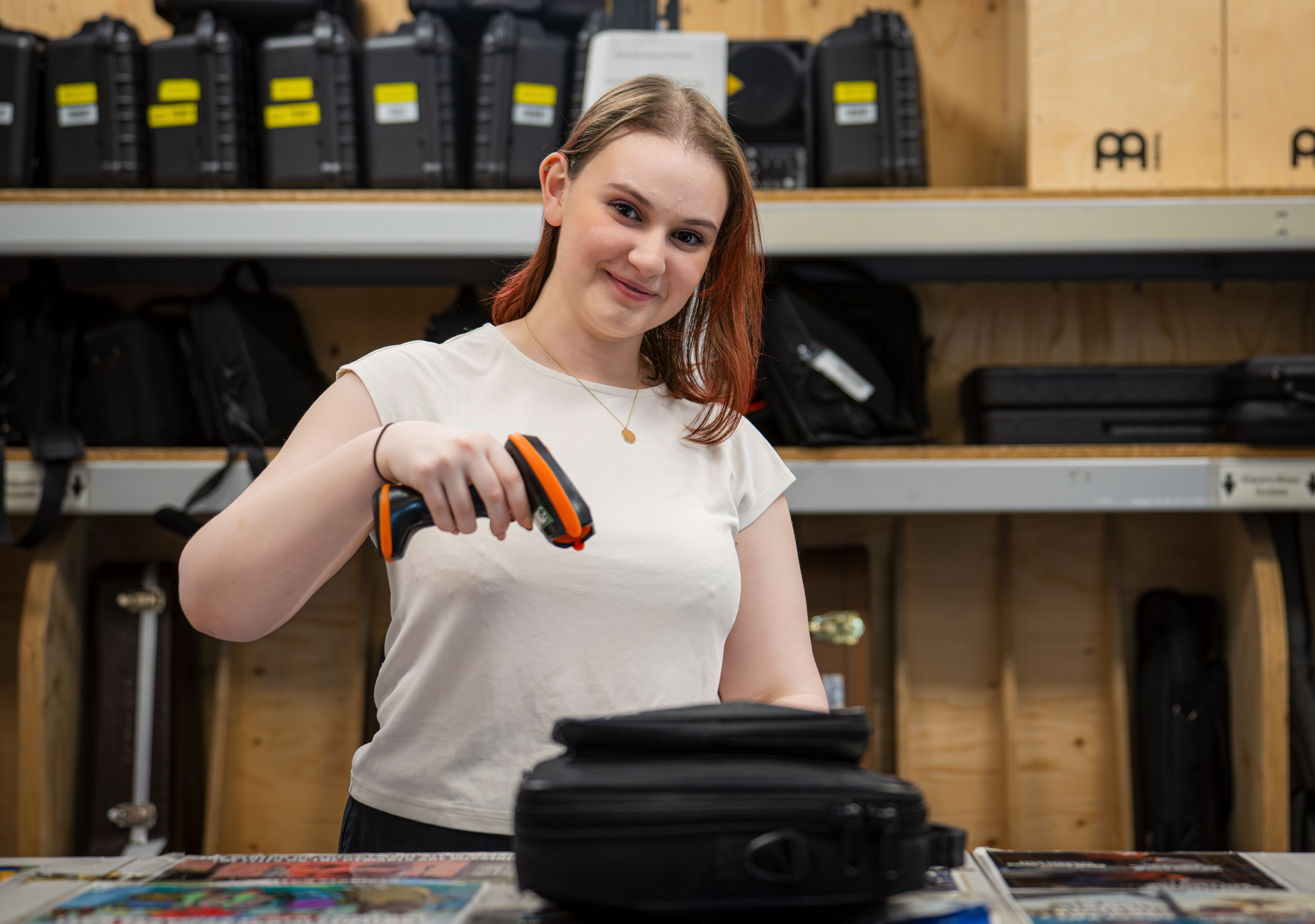
Technical Services
LIPA’s Technical Services team can help with general technical queries and booking out equipment for short-term loan. Loan equipment includes musical instruments, microphones, various recording and playback equipment, digital video and stills cameras and AV equipment.
Term-time opening hours allow you access to Technical Services from 9am until 11pm every weekday and 9am until 5pm on Saturday and 11am until 5pm on Sunday. Outside of term-time it is open on weekdays from 9am - 5pm.

Learning Resources Centre
LIPA’s Learning Resources Centre (LRC) is a specialist creative and performing arts library with an extensive collection of books, e-books, scores, CDs, DVDs, e-resources, print and electronic journals. Whether you are looking for individual songs or scripts, background research or creative inspiration, the LRC Team will be able to help. The LRC offer support sessions in ICT and study skills through subject specific lectures, as well as one-to-one and drop-in sessions, ensuring you get the most out of your study. The LRC website provides the gateway to LIPA’s online catalogue and electronic resources and includes links to a wide selection of help sheets and video guides.
In addition, LIPA’s virtual learning provision which includes Moodle, holds a variety of subject-specific learning materials, such as lecture notes, useful web links and module information. The majority of these services are available off-campus. LIPA’s integrated learning environment has a variety of study spaces, including individual and group work areas, and an open-access computer suite. Facilities include printing, copying and scanning, plus binding and laminating equipment.
A range of stationery is available for purchase to support your studies. Opening hours during term time are Monday and Wednesday 9.00am to 6.00pm, Tuesday and Thursday 9.00am to 8.00pm, Friday 9.00am to 5.00pm. The LRC may be closed for some weeks in June and is also closed during July and August.
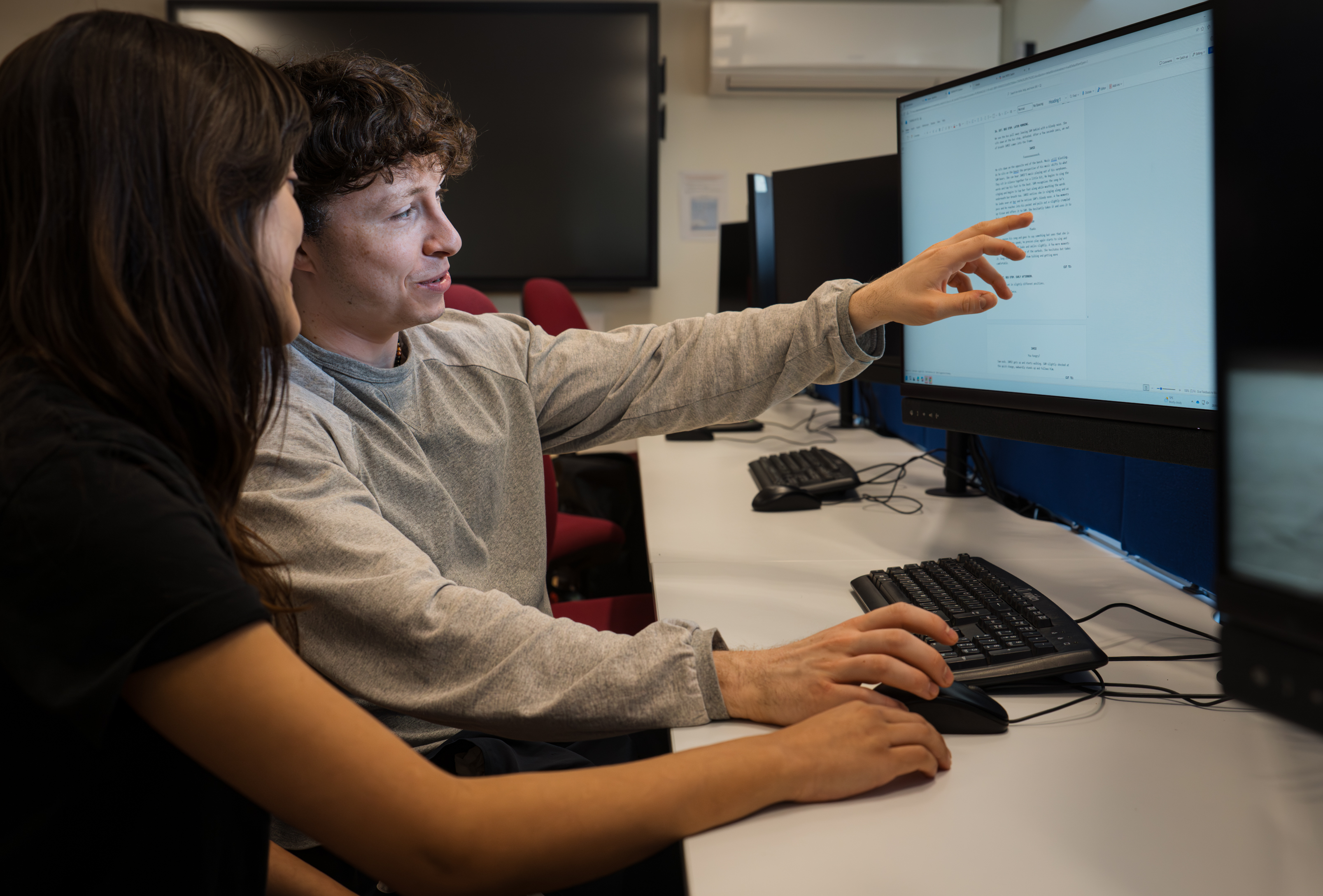
ICT Services
LIPA's Information, Communications and Technology Department provides the infrastructure and services framework that enable students to exploit the latest information and communication developments. Industry-standard computer resources are running the latest productivity software on high specification workstations in dedicated computer suites. LIPA also has a colour A0 plotter, ideal for floor plans. All PCs are installed with Microsoft Windows, Microsoft Office & Project as standard.
There is also access to a range of additional specialist software installed on selected workstations. These include AutoCAD, Adobe Creative Cloud applications, EarMaster, Sibelius, MindManager, Vectorworks and WYSIWYG. All workstations have access to the Internet, email and other electronic resources.
There is free Wi-Fi access throughout our buildings for students and staff members via the Eduroam network which provides a world-wide roaming access service developed for the international research and education community. Specialist ICT staff are available to answer questions, give assistance and advise on ICT issues.
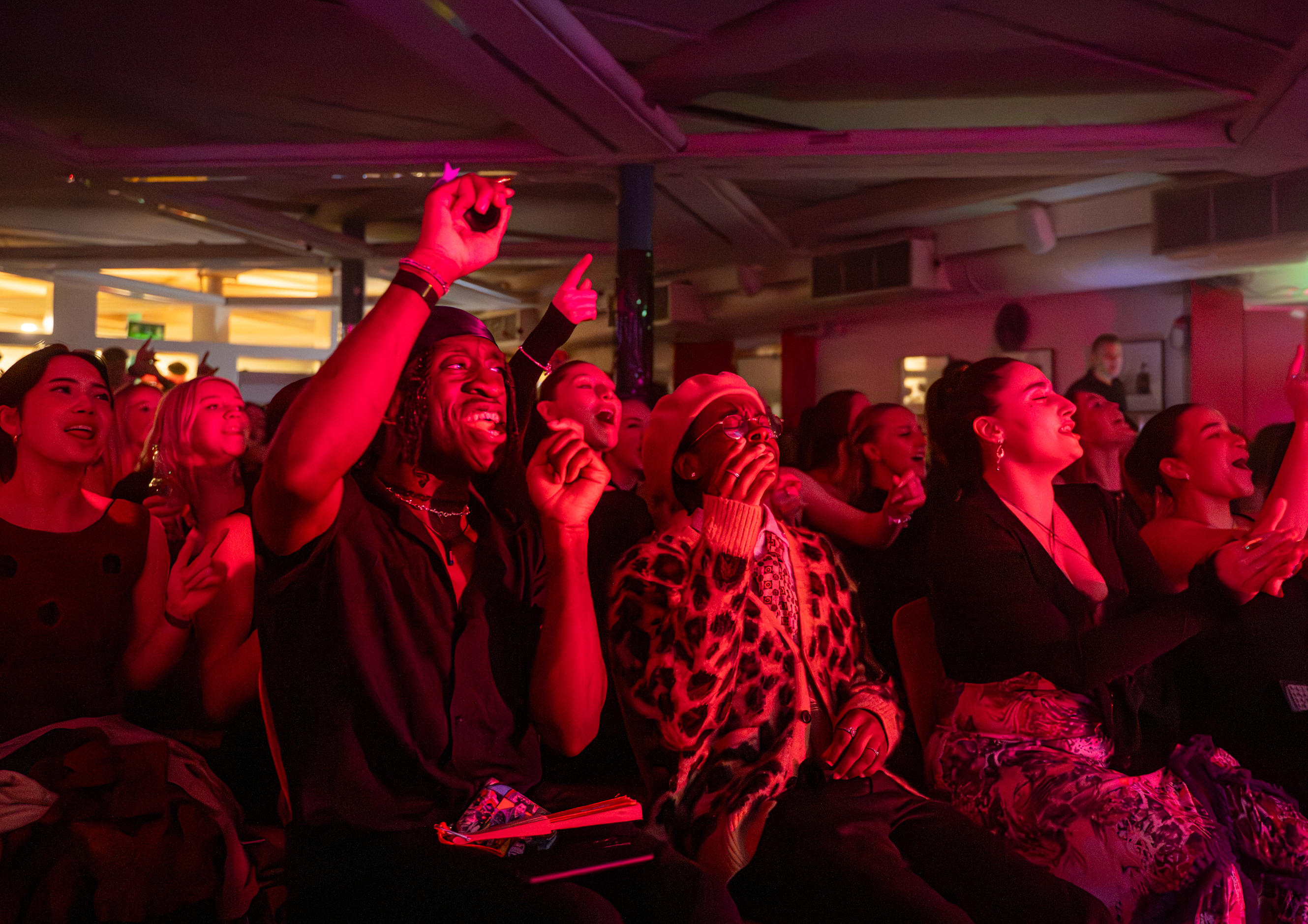
LIPA Bar & Canteen
As well as serving food and drink, the bar and canteen are the hub of social activity within LIPA with both spaces licensed for performances. The canteen is the venue for LIPA’s weekly gig night, The 2ube. Most Fridays the 2ube features live performances, showcasing musicians from LIPA and Liverpool’s music scene. The event is a collaboration between Management, Music, Sound Technology and Theatre & Performance Technology students.
The canteen also hosts open mic and jukebox shuffle nights, and independent student organised performances and benefit nights. The bar hosts regular quiz nights and Student Event Board parties.
The bar is open Monday, Thursday and Friday from 3pm - 11pm, and Tuesday and Wednesday from 3pm - 10pm, with extended hours for special events.
The canteen is open Monday to Friday from 8.30am – 3pm, serving food and drink at student-friendly prices.
LIPA is also home to a 92 Degrees Coffee shop. The popular Liverpool independent has a number of coffee stores and roasteries across the north west. It serves up barista coffee and cakes in the Art School Atrium during term time.



Dr Steve Davies
Head of Filmmaking and Creative Technologies
Steve is a filmmaker with nearly 20-years’ worth of industry experience, working on documentaries and network dramas. He’s creative director of his own production company, filmcafe, which has worked with clients such as the BBC, NHS and McDonalds including unique immersive imaging systems for both ultra-high resolution markets and mobile platforms. His PhD is in virtual reality video, concentrating on user-centred approaches to media creation and consumption by exploring interactions with media in virtual environments.
Before joining LIPA, he worked in universities across Wales, lecturing in television, filmmaking, cinematography and digital media.

Daniel Pope
Lecturer
Daniel has many years’ experience in broadcasting and film production. A genuine fascination with postproduction and visual effects led to a role at Framestore where he worked for many years on a variety of projects from feature films to commercials. Upon moving to the North, he took the role of VFX Editor on the BBC Worst Witch, after which he began lecturing at various universities. Daniel takes great pleasure in sharing and growing his knowledge.

Dr Ryan Taylor
Lecturer
Ryan has a specialist knowledge of scriptwriting, transmedia storytelling, paratextuality, convergence culture, fandom, American television, media representations of gender, horror film theory and screenwriting. Having worked in academia for over a decade, he has lectured at various universities (including The University of Southampton and The University of Portsmouth) and taught modules/topics on: Crime Television; Gender, Sexuality & Cinema; Early Hollywood; British Cinema, Horror Film; Cultures of Consumption and Screenwriting. He is also a member of the advisory board of peer reviewers for three academic journals and has written numerous articles and book reviews, along with presenting papers at various internationally prestigious conferences.
While at LIPA, and specialising in scriptwriting practice and broader topics of media theory, Ryan delivers modules on the Filmmaking and Creative Technologies programme which include: Story, Script & Authorship (Level 4); Writing for Camera & Audio (Level 5); Devised Collaborative Live & Digital Performance (Level 5); Spoken Word (Level 6); Cross Platform Perspectives (Level 6); and Core Ideas/Theories (Levels 4, 5 & 6). Throughout these modules, Ryan has been a keen advocate for workshopping and peer feedback and is especially enthusiastic about active, student-centred learning. Indeed, he believes that lecturers are not the custodians but rather the facilitators of knowledge and it is their job to encourage rather than dictate critical discourse, intellectual enquiry and creative practice. As such, he strives to create an environment of interactive exchange in which learners can discuss their ideas and, collectively, we can stitch different perspectives together to form a larger holistic understanding. Within such an environment and collaborative knowledge community, we can all investigate, debate and learn together - it is only through communal exploration and discussion that we can analyse artistic practice and develop our own skills as storytellers.
Ryan’s lectures/research interrogate social inequalities concerning race, gender and sexuality and the ways in which unequal power relations are normalised/challenged by our storytelling cultures which have never been more important as we live in a polarised world of division, fragmentation, and misinformation. However, storytelling enables us to communicate our perspectives, speak truth to power and give voice to diverse cultural experiences. Storytelling is where we can imagine a better future and bring it to life.
This year, Ryan’s key publications include:
Chapters in Edited Collections:
- Dexter: Forensic Scientists, ‘Orientated’ Audiences & the Dark Defender of the Social Order. In R. Janicker (Ed.), The Scientist in Popular Culture. Maryland: Lexington Books.
Journal Articles:
- Bryan Fuller’s Hannibal: Cannibalizing the Canon. Published in the special issue of the Journal of Screenwriting entitled ‘The New Screenplay? Emerging Screenwriting Styles, Modes, and Languages’ [expected November 2022).
What Our
Graduates Do
This is a new and exciting programme launching in 2027. The course is designed for students wishing to pursue careers as directors, producers, cinematographers, editors and creative technologists.
Whether you want to create independent films, develop immersive experiences or work within the wider screen and creative technology industries, the creative, technical and critical skills you gain from this course will provide a strong foundation for your future career.
Graduates may pursue opportunities in areas such as film production, virtual and augmented reality, immersive media, interactive content creation and virtual production
Related
News

Autumn/Winter Season of public performances 2026/27

Filmmaking students create official video for new B*Witched single

Filmmaking grads premiere 'heartrending but heartwarming’ movie

Filmmakers develop directing skills with industry professionals

Gallery: Filmmakers recreate scenes from Blade Runner

Watch: award-winning film created by LIPA students and grads

Winter/Spring season of public performances

Gallery: Term one productions 2025/26

LIPA secures £2.5m Office for Students capital funding to deliver new performance and digital innovation hub

Autumn/Winter Season of public performances

LIPA achieves major milestone: new degree awarding powers

Gallery: Graduation 2025

Sir Paul McCartney honours leading arts figures at LIPA graduation

LIPA grads and students head to Edinburgh Fringe

James Nesbitt Q&A: six key takeaways

LIPA grads get creative for Christmas

Gallery: LIPA Christmas Concert

Filmmaking students learn from Big Bang Theory director

‘Films have a way of finding you out’ - Sir Sam Mendes at LIPA

LIPA shortlisted for environmental award

LIPA grads and students at Edinburgh Fringe

Gallery: Graduation 2024

Award-winning LIPA grad honoured by Sir Paul McCartney

WATCH: 2ube Xtra - LIPA’s student run music festival

LAMAs award ceremony celebrates next generation of film talent

Twelve day music festival showcases LIPA students
Educational qualifications are important but are limited in what they can tell us about you.
Your natural ability, your fit with what and how we teach, your growth and your potential are also key factors in our admission process. We can’t evaluate these solely on your educational achievements, so no matter which course you are applying for, we look for the following attributes on your application and at the interview stage.
Additional Costs
As part of this course, there are likely to be some additional costs that are not included within your tuition fees. We will send you more detailed information about books and equipment we’d like you to bring after you accept your offer. Many of the costs suggested below are optional.
Trips and training courses
As part of the various modules on the programme, some class trips may be offered to help support your learning. Some of these will form part of the curriculum but most will be important additions to your work. Some trips may be free or subsidised but you may be required to cover some costs yourself. Please allow up to £100 for these throughout the year.
Seeing shows and films
You should see films and live performances as often as you can. This is not compulsory, but it will help your development as a creative practitioner. Trips to the theatre and live events are not covered by your tuition fees, so you'll need to cover these costs yourself. We are occasionally offered a limited number of free or discounted tickets for shows in the city. We also encourage you to see LIPA shows. We offer discounted student tickets to make this as affordable as possible.
Portfolio
In addition to fundamentals such as printing costs, throughout your studies you will produce work to build your portfolio. Capture and storage of this work will require students to have appropriate storage media (e.g. SD Card, HDD, SSD). These are important investments in your future career.
Project work
While developing some of your projects, you may incur costs related to transport or accommodation. This will depend on the nature of your projects and the research you wish to carry out in order to produce them.
Additional Costs
As part of this course, there are likely to be some additional costs that are not included within your tuition fees. We will send you more detailed information about books and equipment we’d like you to bring after you accept your offer. Many of the costs suggested below are optional.
Trips and training courses
As part of the various modules on the programme, some class trips may be offered to help support your learning. Some of these will form part of the curriculum but most will be important additions to your work. Some trips may be free or subsidised but you may be required to cover some costs yourself. Please allow up to £100 for these throughout the year.
Seeing shows and films
You should see films and live performances as often as you can. This is not compulsory, but it will help your development as a creative practitioner. Trips to the theatre and live events are not covered by your tuition fees, so you'll need to cover these costs yourself. We are occasionally offered a limited number of free or discounted tickets for shows in the city. We also encourage you to see LIPA shows. We offer discounted student tickets to make this as affordable as possible.
Portfolio
In addition to fundamentals such as printing costs, throughout your studies you will produce work to build your portfolio. Capture and storage of this work will require students to have appropriate storage media (e.g. SD Card, HDD, SSD). These are important investments in your future career.
Project work
While developing some of your projects, you may incur costs related to transport or accommodation. This will depend on the nature of your projects and the research you wish to carry out in order to produce them.
Additional International student costs
UKVI English language requirements
If you are not from a majority English speaking country (as determined by UKVI), you will be required to establish to LIPA that you meet the English language requirements stated in your offer letter, before getting a Confirmation of Acceptance for Studies (CAS) number. The CAS number we issue you allows you to begin the visa application process. There is no requirement for a student to evidence their English language qualification at the point of application, audition or interview.
Students who accept a place on Certificate of HE Foundation Acting (Musical Theatre) or Certificate of HE Foundation Acting (Stage & Screen) must sit a UKVI-approved Secure English Language Test (SELT). The cost of a SELT can range from approximately £180 - £250. You may also incur travel costs to your closest test centre.
Students who accept a place on an undergraduate or postgraduate course may have the opportunity to evidence their English language through a qualification from another country which meets LIPA’s assessment of its academic suitability, take a UKVI-approved Secure English Language Test (SELT), or completing and passing a LIPA Institutional Assessment of English. The cost of a SELT can range from approximately £180 - £250. You may also incur travel costs to your closest test centre. A LIPA Institutional Assessment of English is free of charge.
Student visa
All international students who do not hold a United Kingdom of Great Britain and Northern Ireland passport; a Republic of Ireland passport; or EU Settled Status (EUSS), will require a Student visa to study in the UK.
The Student visa application fee in 2026 was £490. Some students will need to have their biometrics taken as part of the visa application process and this may incur additional costs, notably travel costs to your nearest Visa Application Centre.
In addition to the application fee, you are required to pay the Immigration Health Surcharge, which gives you access to the UK’s National Health Service (NHS). Once your course starts, any medical treatment you require in the UK will be free of any further charges if you use the NHS, just as it is for UK nationals. The surcharge is compulsory, even if you hold private healthcare insurance. 2026 surcharge costs were as follows:
Foundation and Certificate of HE programmes: £776
Undergraduate (BA) programmes: £2,716
Postgraduate (MA) programmes: £1,164
The surcharge will give access to NHS healthcare services from your arrival in the UK until the date your visa expires.
Accommodation
Some accommodation providers may require international students to pay a larger deposit, or pay for their accommodation in fewer, larger instalments. This is something individual students will need to discuss with their accommodation provider.
Apply now
View the programme specification on LIPA's course catalogue.